Skip to content

Home

Josh Hamilton: A Cautionary Tale

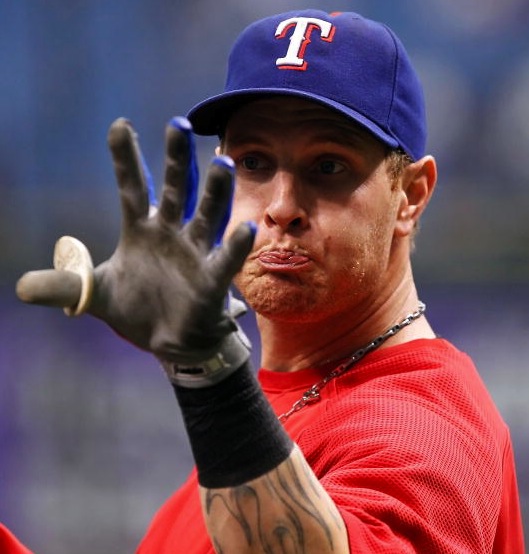
He’s got five fingers, and they’re all pointed at everyone else.I wouldn’t be worried about free agency [because] I’m going to concentrate on the Rangers and play baseball for this year and that’s what I’m doing. I’m praying a lot about it; God will show up whether I’ll be here or somewhere else. It’s not about where I want to be – it’s where he wants me to be.

For comments made less than a year ago, that time seems to have long since passed. Despite everything that has happened before and since, Josh Hamilton still doesn’t get it, and is once again proving that it’s all about him. No, not Him, the God Hamilton professes his faith for. It’s all about Josh Hamilton, the former Texas Rangers slugger that would have the rest of the baseball world feel sorry for the way he was treated by fans as his time in Arlington came to an unceremonious close.

You see, for all the talk about focusing on the season, keeping the business side of baseball from clouding his emotions, Hamilton is the one bringing emotion back into the picture. When he signed with the Angels in December, he likened the Rangers not going all-out for him to the Rangers not “putting a ring on it”, implying that his hurt feelings indeed played a part in his departure from Texas.  In an interview with CBS 11’2 Gina Miller on Sunday, Hamilton had some very pointed comments directed straight at the very fans that helped propel Hamilton into prominence after a well-publicized and constant battle with addiction once threatened to take him out of the game forever:

There are true baseball fans in Texas, but it’s not a true baseball town. They’re supportive, but they also got a little spoiled at the same time pretty quickly. You think about three to four years ago. It’s like, come on man, are you happier there again?

What Hamilton fails to realize is this: most people have a hard time feeling very sorry for a millionaire athlete. While once relishing the very same fans that supported him through several very public relapses, injuries, and even an accidental death at the ballpark, Hamilton is now pointing fingers at them, claiming they are spoiled. That includes me, and quite frankly, I don’t appreciate the way Hamilton is failing to own up to the fact that he got booed at the end, and only at the end, when his effort didn’t match the magnitude of the moment. Instead, he turns around and points fingers, blames everyone else, and uses God’s will as a crutch as if it somehow absolves him of accepting any sort of responsibility for his own failure to do the most basic thing an athlete is called to do: to try.

Prior to his late-season collapse in 2012, Hamilton had been mostly known as a player that gave an all-out effort, sometimes injuring himself in the process. Yet even in those times, he looked for someone to blame. In 2011, when a headfirst slide into home plate left him with a broken bone in his arm, he pointed his finger directly at third-base coach Dave Anderson, who sent Hamilton sprinting toward home plate in a game against the Detroit Tigers:

I listened to my third-base coach. That’s a little too aggressive. The whole time I was watching the play I was listening. [He said], ‘Nobody’s at home, nobody’s at home.’ I was like, ‘Dude, I don’t want to do this. Something’s going to happen.’ But I listened to my coach. And how to you avoid a tag the best, by going in headfirst and get out of the way and get in there. That’s what I did.

When asked again the next day how he felt about Anderson’s decision to send him home:

Dumb. People are going to blame who they want to blame. I threw him under the bus by telling the truth about what happened.

Yeah, since creating animosity with your coaches is always the best idea. Time after time, Hamilton, who had been told his entire life how talented he was, refused to listen to any kind of coaching, refused to change his plate approach, and at times, refused to even so much as take a pitch outside of the strike zone. His worst offense, however, came when he completely disappeared during the most crucial stretch of the season. Later citing too much caffeine, Hamilton sat out an important stretch of games with what he said was a vision issue. Upon his return, he had what many would consider an effort issue.

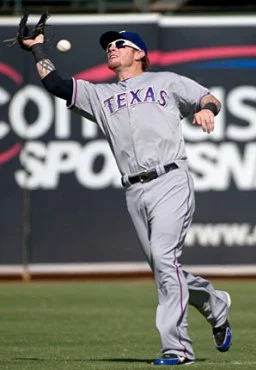
On the final day of the regular season, Hamilton dropped what is normally a routine fly ball, seemingly lacking any effort or hustle. In the AL wild-card game, Hamilton was 0-for-4, only taking 8 pitches to amass all 4 outs during the game. To even the most untrained eye, it seemed as if Hamilton was letting his emotions get the best of him, and he looked intent to just swing, get the day over with, and go home. Now, fortunately for Rangers fans, Hamilton can call California home.

Hamilton may not realize it yet, but it won’t take several years of mounting frustration for him to go from fan-favorite to being booed. All he needs to do is ask Albert Pujols. Pujols went from being the game’s most celebrated hitter to an afterthought in 2012. The first time Hamilton starts hacking at every pitch, throw a coach under the bus, or shows a lack of effort, he won’t only be hearing it from his new manager, Mike Scioscia. He’ll hear it even more from the fans. As bad as Hamilton may truly believe he was treated in Texas, he’s about to find out just how good he really had it. It isn’t called Texas hospitality for no reason. Until then, the idea of sitting in complete silence at every Hamilton at-bat in Arlington was brought up to me, and I couldn’t think of a better way to handle the situation. After all, Hamilton has made it abundantly clear he has no love left for the fans that helped build him up to what he is now, and what better way to return the favor than by getting into his head with complete and utter silence?

There was a time when I believed one of baseball’s most talented players would be a Ranger for the rest of his career. His own finger-pointing and lack of effort led to his departure. In the end, all the talent in the world won’t take away from the fact that he just can’t get over himself. Los Angeles, he’s your problem now. Just don’t say we didn’t warn you when the home runs stop and Josh Hamilton blames everyone but himself.
What’s the Plan, Man? A Look at Center Field

It’s time for Ron to let Leonys out of the doghouse.With pitchers and catchers reporting to Surprise, Arizona in less than a month for spring training, the dark of the offseason is beginning to lift. With that, there are still some questions that face the Rangers heading into 2013. With the acknowledgement that things could change as soon as this is posted, I’m going to attempt to speculate on some of those questions by asking the hypothetical question of Jon Daniels: What’s the plan?

Up first is the debate over who plays center field in 2013. During the winter meetings, there was much speculation on various signing and trade possibilities that the Rangers may or may not have been exploring. With Josh Hamilton signing with the Angels, there were rumors that the Rangers attempted to trade for Justin Upton. An Upton to Seattle trade was attempted last week, but Upton blocked the deal. It has since been reported that Texas has moved on from the pursuit of Upton, a move that, if true, I happen to agree with. So who plays center field in 2013?

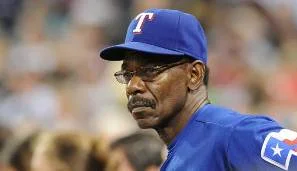
In my opinion, that player is already on the roster, and to this point, Ron Washington hasn’t exactly given him a fair shake. Washington has shown an unwavering loyalty to older players, and at times, the team has suffered from his refusal to inject youth into the lineup. Whereas veterans have been given a certain amount of slack for mistakes, any mistake on the part of younger players has earned them a spot on the bench. Leonys Martin has been one of those younger players at this point in his career.

Chances are high that Craig Gentry will enter spring training with a leg up on Martin for the job in center field, but all things considered, I’d rather see Martin get the nod. At 29 years old, Craig Gentry has already shown us what he is: He’s a speedy athlete, provides good range in the outfield, his arm is strong, and he’ll get his fair share of infield hits. The problem is, beyond that, Gentry doesn’t really bring much to the table. He lacks any sort of power to complement the speed, and the regression we saw in Michael Young’s game last season was largely due to his inability to drive the ball into the outfield. Gentry can be a major asset if he gets on base, but he won’t move runners into scoring position, much less drive many of them in to score. Also, one aspect to consider is that players that rely heavily on speed tend to decline much faster once they reach the age of 30.

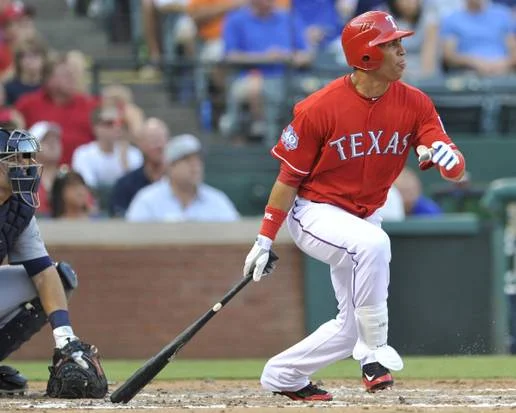
Leonys Martin, while not as fast as Gentry, still possesses above-average speed, range, and an ability to read the ball in the outfield. What Martin really brings to the table over Gentry is his talent on offense. His power grades out fairly well, he has good bat speed, and he also has good pitch-recognition ability. He still has the tools to be an aggressive runner on the base paths, something the Rangers certainly missed having enough of in 2012. While Martin didn’t receive enough playing time in Texas last season to really move out of the “small sample size” realm, his 55 games at AAA Round Rock were impressive enough to at least merit getting a shot at a full-time role for the Rangers in 2013. In those 55 games, Martin put up a .359/.422/.610 line for a whopping 1.033 OPS. While those stats won’t likely translate directly to the big leagues, what they show is that the tools are there for Martin to be an impact player on a team that will be looking to replace what was, at times, MVP production in center field.

The biggest issue I have with Gentry playing on a consistent basis is seated in his performance against right-handed pitchers. His OPS of .686 against righties in 154 plate appearance in 2012 raises some concerns for me. I simply can’t foresee a scenario where Gentry finds a way to improve that area of his game significantly enough to make a difference.

At the very least, I could see a platoon scenario – one in which Martin starts against right-handers and Gentry starts against left-handers – being a possibility. Both players, if employed in a manner in which they are likely to succeed, can provide some value for the Rangers. The scenario that entices me most, however, is the one in which Martin is the everyday center fielder in 2013. He’s got the higher ceiling, has the tools to make it work, and I feel like he should be given a chance to become a mainstay in Texas. It’s not likely he’ll be able to come close to replacing Hamilton’s production, but his overall makeup is one of a player that can be a difference-maker for a team that hopes to remain in playoff contention for years to come.

The Line

Writing about baseball during the offseason is something I’ve had a difficult time doing in the past. It isn’t for being blown out on the subject, a lack of interest, or anything of the sort. What I’ve found is that the offseason lends itself to more rumors and misinformation than anything else, and by the time I’ve written something, it’s already wrong. Until now.

For the first time since 1996, not a single eligible name on the ballot has received enough votes to enter the Hall of Fame. It isn’t for lack of big names, because in reality, the big names are why this is being written right now. Those big names, the scapegoats of the so-called “steroid era”, are the very names garnering headlines for the empty class of 2013.

The debate has been raging for a decade about what would happen when this time came, and now that it’s here, we’ve received an answer: that no player linked to PED usage will be voted into the Hall of Fame. That, to me, is the real travesty.

I’ve long understood that there’s a certain negative stigma associated with “cheating”, even in its most simple forms. What I’ve failed to fully understand in this situation, however, is how the very people that enabled the culture in baseball are now the ones leading the charge to bull-rush candidates off of the ballot.

As the sport that was, at one time, dubbed America’s pastime, baseball has a very rich – although at times rigid – history.  There was the Black Sox Scandal during the 1919 World Series, in which eight members of the Chicago White Sox were banned for life from baseball for intentionally throwing games, a list of people that included “Shoeless” Joe Jackson. History has still never forgiven Jackson, and he is still banned from the Hall of Fame.

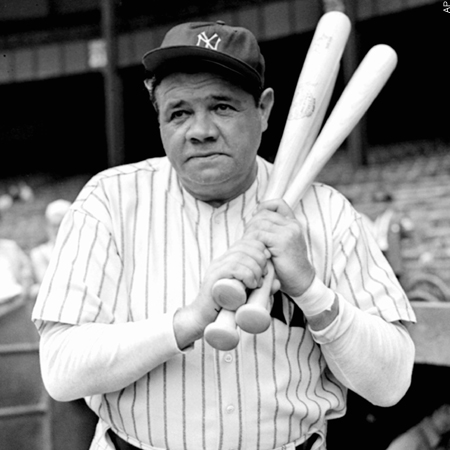
In 1961, Roger Maris broke Babe Ruth’s single-season home run total, and many clamored that the record should have an asterisk next to it since Maris had more games to break the record (162 versus the 151 Ruth had). The part that was never told is that it actually took Maris fewer player appearances to hit his 60th homer. He hit it in his 684th plate appearance of the 1961 season, while Ruth didn’t hit his 60th until his 689th plate appearance in his history 1927 season. Yet, even though Maris isn’t in the Hall of Fame, his record is now, for the most part, universally recognized as having surpassed that of Babe Ruth. Why is history so forgiving for some, yet not for others? I’ve struggled to answer the question.

As baseball fell from popularity in the 1970’s due to increasing popularity of football, the ball was rolling for everything that led up to the steroid era. Baseball had long been a radio business for those that weren’t in attendance of games. Old ballparks weren’t meant to hold more than about 15,000 fans, and certainly didn’t offer modern attractions seen in today’s parks. At the same time, the AFL/NFL merger of 1970 kicked off an era of high popularity for professional football, and even today, the popularity is continuing to rise. Football was fun to watch on television, while baseball games were too long and slow.

As the 1980’s rolled around, baseball began losing more athletes to football, and the game started changing. Players started getting stronger and faster. “Greenies” had been popular for some time, but weren’t at the heart of the issue. Some baseball players, as noted earlier this year by Bobby Valentine, began lifting weights. At the time, weight training was seen as taboo in the baseball world. Players that did it didn’t want others knowing.

When the baseball strike happened and wiped out the 1994 postseason, fan reaction was that of anger. By the time baseball resumed regular activities in April of 1995, fans didn’t care to attend games any longer, much less watch on TV. Players, coaches, owners, and all baseball executives were looking for a way to boost popularity within the sport. So when Sammy Sosa and Mark McGwire gave fans a historic home run chase in 1998, in which both players shattered the previous single-season record of 61 still held by Roger Maris, everyone was happy. Fans enjoyed the show, owners and MLB executives were thrilled that their game was back on the map, and media members finally had something good to say about baseball again. All was well. Or so we thought.

As teams began requiring players to adhere to a weight training regimen during this time, the overall makeup of a baseball player changed during this time. When some players grew at a higher rate than others, fans naturally mocked that steroid use was to blame. The fans, you know, the folks that aren’t even an integral part of everyday baseball activities, knew exactly what was going on. Owners and managers had to have had their suspicions as well. More importantly, journalists, the people employed to cover every at-bat, every clubhouse altercation, and every postgame reaction, they knew better than anyone, and had more of a voice than anyone to shine light on what was going on in baseball. But hey, when the going is good, why change that? Never mind the fact that players like Tony Gwynn were acknowledging steroids in the mid-90’s, there was no rush to do anything about the issue. Even when random testing was implemented in 2001, it was only for minor league players not currently on an MLB 40-man roster. When testing was instituted at the MLB level, there was no penalty for testing positive until 2005, when even a 10-day penalty was all that was imposed on offenders. There was never any real hurry to fix what was acknowledged as a “problem”. Attendance was rising and the stories were juicy.

Now, in 2013, those very same writers who had a moral obligation to uncover the truth then, the same people that benefited from every record broken during that time, they’re supposed to be the people to play the role of judge and jury? Pardon me for not finding much credibility in it.

Yes, I get that Barry Bonds, quite possibly the most mercurial baseball player of his time, probably broke some records due to steroid usage. I understand that the name Roger Clemens will always hold a certain amount of negativity. What I also understand is that baseball did everything in its power to enable the problem, whether it be building more hitter-friendly ballparks, lowering the pitching mound, or turning a blind eye to everything in front of them. In talking to my brother about this issue today, he provided quite possibly the best insight I’ve seen in on the subject: “The thing is, where is that line? If you say steroids are considering cheating, but greenies are OK, is that the line? What about the things in between them? Are they OK too? Are steroids the beginning of the line or the end?”

We live in a time where “innocent until proven guilty” is just something we say, yet our actions rarely, if ever, back that claim up. It’s been speculated before that Hank Aaron could have possibly been a steroid user. While there has never been any definitive proof, the fact that his numbers got better as he reached the end of his career have raised some eyebrows, nonetheless. Yet, it’s these same types of unproven claims that are keeping many current names on the ballot from being inducted into the Hall. I just can’t buy that writers are really looking at the issue objectively. More than that, I’m almost 100% convinced that it has everything to do with the writers pretending that they were blind to the issue for so long.

In the end, I guess I’m just disturbed by what has now become a culture of biting the mouth that feeds. Baseball writers have been given the ability to, in a sense, play God, and that’s a power that is too easily abused. If some of baseball’s most historic stars are left out of the Hall of Fame, I get it. I don’t have to like it, but I get it. What I don’t get is this: if cheating is cheating, where do we draw the line?

Humility in the Wake of Arrogance

It must have been the blue eyes.An entire weekend has passed since the 2012 Texas Rangers were bounced out of the postseason picture in a 5-1 defeat at the hands of a Baltimore team that surprised everyone in the way it consistently won close games this season. Unfortunately for the Rangers, this game wasn’t close enough in the end, and from the first pitch when Michael Young provided an error in a way that only Michael Young can, it proved to be a microcosm of a tumultuous season that didn’t end the way any of us wanted it to.

This was supposed to be the season. After being one strike away in 2011 and adding Yu Darvish to the mix — the same Yu Darvish that pitched like an ace without any run support on Friday night — this was supposed to be the team that had the right mix of offense, pitching, and defense to finally finish the deal. Unfortunately, that very attitude was what brought the team crashing back down to the reality that nothing in baseball is a given.

Once the calendar flipped to July, the Rangers became a mediocre team, hovering around .500 for the 2nd half of the season due to an inability to drive in runners in scoring position. It was an arrogance that kept the problem from being fixed, and it started at the top with Ron Washington. Washington, for all of the goodwill he built up in managing the team to back-to-back AL pennants, wasted all of that and more with his constant insistence that things would simply work themselves out. In his mind, the team was full of winners who would eventually start clicking. As much as I’ve harped on Michael Young being one of the worst players in baseball in 2012, it wasn’t ever really Young’s fault. It was his manager who chose how to use him. The manager has to put players in a position to succeed, and Washington failed miserably at the task this season.

Despite Young’s struggles, he was continually placed in the lineup instead of used in a more situational role as he should have been. Young was still effective against lefties, yet he was used in the middle of the lineup every day. Craig Gentry was a lefty killer, yet ended up being benched for the better part of two months because David Murphy had strung together some hits against them. As could have been predicted, Murphy came back down to earth against lefties, and by the time Gentry was given another chance, he didn’t have time to ever find a rhythm.

Mike Olt and Jurickson Profar were called up to help infuse the lineup with young talent, but Washington made it abundantly clear that he intended to stick with his veterans. In the final moments of Friday night’s loss, Washington put in Profar as a pinch-hitter, and Profar delivered. It was the kind of moment that just leaves you screaming at the television, asking why that sort of move wasn’t tried months ago. Sure, it might not have worked, but given the inability of the offense to ever really click in the 2nd half of the season, Washington owed it to himself, his organization, and the fans to try something different.

Perhaps the most dubious part of the evening was the part played by Josh Hamilton. If Hamilton wasn’t planning on this season being his final in a Rangers uniform, he likely is now, as he’ll need to do a lot to regain the love of fans that watched him throw up excuse after excuse every time he failed to deliver this season.

To be fair, we’ve always known that Hamilton comes with baggage, but it was always the type that left you worrying about a diversion off of the path of sobriety, not the kind of things we saw this season. When he reached a period of struggles, Hamilton refused to adjust, rather he always found an excuse not to. When he was utterly useless during the months of June and July, he ended up blaming it on an addiction to chewing tobacco. When he pulled himself from a game in September against the Angels and missed five more games after that, he ended up blaming it on being addicted to caffeine. In 2011, when he failed to consistently hit during day games, it was because he had blue eyes, thereby making it difficult to see the ball.

In 2010, Hamilton eliminated a toe tap from his swing based on the recommendation of Clint Hurdle. After the adjustment, Hamilton went on a tear in which he was the AL MVP despite missing significant time on the disabled list. This season, however, Hamilton couldn’t be bothered to adjust anything. His attitude, and the enabling of his manager and other players around him, left him of the mindset that everything would come around at the right time. In the meantime, the excuses built up, and on top of that, he couldn’t be bothered to even give full effort on most days.

In the past, it was Hamilton’s reckless style of play that made him special, yet also injured him. It was that version of Hamilton the team always needed, because anything less and Hamilton was rather ordinary. This season, with free agency looming, it’s likely Hamilton didn’t want to sacrifice his body and risk not maximizing his value on the market. No longer did you see him sliding headfirst, jumping into walls, or laying out to catch a ball in outfield. Instead, you saw more jogging, less highlight-reel defensive plays, and more of a guy that would rather swing and hope the ball went over the fence than a guy that wanted to put a ball in the outfield or take a walk and take his chances on the basepaths.

Hamilton is gone. I just see no way the Rangers pay him the kind of money he’ll demand, especially with the taste of the last few weeks still fresh in their mouths. What happens next is entirely dependent on how well the Rangers make the next transition.

Yu Darvish looks primed to be the ace the team wanted. Most of the offensive talent is still there. There is a young influx of talent ready to take charge. What isn’t known is how much Michael Young will be utilized, and how willing Ron Washington will be to trust young players. In 2009, Washington wasn’t asked, he was told: Elvis Andrus was to be his starting shortstop. Washington was opposed to the idea, and took every opportunity to get Andrus out of the lineup. Almost 4 years later, Andrus could be one of the hottest trade commodities on the market with Jurickson Profar waiting in the wings.

This is a team that could contend immediately in 2013. At the same time, a refusal by Washington to allow his young players to be a vital part of the organization could make next year a rebuilding project instead. For a manager that professed this season that he would ride out the sinking ship, he must realize that the ship has sunk, and it’s time to call for help.

Washington was a coach with the Oakland A’s in 2002 when the events of Moneyball took place. He didn’t agree with the sabermetric approach then, even though it worked, and he quite obviously thumbed his nose to it this season, as the A’s used the same approach to upend the Rangers on the final day of the season to win the AL West. The most important characteristic of a Major League manager is his ability to make the necessary changes, and the success of the team moving forward will hinge on Washington being able to make some changes with himself. The Texas Rangers have likely been humbled, and I can only hope that humility will spark a flame and drive the team to get back to playing the kind of baseball we expected over the last couple of seasons.

The Irresistible Force Paradox

Washington’s glare could tear through the heart of Mike Olt.It’s a paradox that has prompted the question many times: What happens when an unstoppable force meets an immovable object?

In this instance, the unstoppable force is the aging of one player, Michael Young, and the immovable object is Young himself, given the continued refusal by Ron Washington to remove him from the lineup. Even in Young’s absence on paternity leave this weekend against the Minnesota Twins, it wasn’t enough to gain any traction on Mike Olt earning some consistent plate appearances at the Major League level.

What’s become painfully obvious over the last couple of months is that Ron Washington has no interest in trusting younger players to play any sort of significant role on a team that hopes to return to a third straight World Series. I won’t go as far as to say that Washington doesn’t trust younger players, but it’s clear that he has an undying trust for his veterans.

While watching yesterday’s game, the subject of younger players in the lineup came up, and inevitably, that Michael Young is indeed struggling this year. I was reminded of why batting average is one of the worst ways to measure player performance, namely because it isn’t really an average of anything, yet it’s still the first thing we see on our television screens when a player comes up to bat.

So Michael Young is hitting .271 on the season. On the surface, it doesn’t look that bad. The problem is, batting average doesn’t really tell the whole story. At the most basic level, a hitter’s job is to get on base. Young’s on-base percentage this season is .304. There are only a handful of players with a lower OBP and Young is walking at a career low rate. Not only is he not getting on base as often, but he isn’t hitting with any sort of power. Slugging percentage, as a reminder, is the total number of bases divided by at-bats.  Young’s slugging percentage is sitting at .350, again only better than a select few players in baseball. When you combine those numbers to get his On-Base Plus Slugging Percentage (OPS), you come up with .654, a whole .200 lower than his resurgent 2011 season. It’s the worst mark of any regular player on the active roster for the Rangers, and, you guessed it, only worse than a handful of players at the Major League level.

Now, the line I was given was, “Well, if the team is winning, it’d be stupid to mess with what’s working. People should let Washington manage the team and do what he wants. It’s obviously working.” While I agree that there needs to be a certain level of trust in Washington’s approach, I think the problem has been created, in part, because there are such high expectations for this team. Furthermore, the team that wins the most games in the regular season won’t necessarily win it all in October. The playoffs, for all their grandeur, are so much different than the regular season. It becomes a battle of small sample sizes, where a lineup that slumps for even a few days can cost the team a chance at the World Series. It becomes even more important to place the most optimal lineup on the field every day, and I’m just not sure that’s the case. Young, the team’s DH when he’s not playing the field, has one job, the most important for a hitter in baseball: to create runs. More runs win more games. It’s the the most simplified formula in baseball. Young’s wRC+ (his league and park adjusted measure of weighted runs created), is sitting at 70. Only four players in baseball are worse at creating runs for their team than Young.

Yes, I know I’m beating a dead horse. It’s just become frustrating to watch a talent like Mike Olt ride the bench helplessly. At the very least, one would like to see a team with a 99.8% probability of going to the playoffs at least see what they have in Olt, so as to not end up with a situation like last season, when Esteban German became a pinch-hitter in Game 1 of the World Series. Beyond even that, it’s important to work young players into the lineup. This is a young man’s game, and when franchise’s either refuse or fail to restock the Major League club with young talent, you look up one day and realize you have a roster full of overpaid veterans. Just ask the Boston Red Sox. Only the Yankees have ever had the kind of cash to withstand the effects of overpaying players who have fallen victim to father time, and despite all the success the Rangers have seen the last few seasons, they aren’t the New York Yankees.

So something’s got to give, but the more we drive toward the final month of the regular season, the more it looks like Ron Washington will stick to the status quo, and you know, maybe we’ll all look back on this and laugh when the Rangers have a World Series championship, but my fear is that, instead, we’ll see Washington’s insistence on consistency and riding out his veterans come back to bite the Rangers when the small details become even more important.